Paul Kane | Writer

What first drew you to the Hellraiser mythos, and when did you realize you wanted to contribute to it as a writer? We understand your first introduction to the franchise started with a telephone call to Clive?

I first encountered the Hellraiser mythos through The Hellbound Heart in Night Visions, after reading – or should I say devouring – the Books of Blood. Bizarrely, when I then saw a video in my local HMV proudly displaying a guy with nails banged into his head on the front, I didn’t make the connection at all. I was too young to see Hellraiser at the cinema, so when the video came out I had to get one of my mate’s brothers to lend it to me, then waited till my parents where out of the house before watching it. I don’t think I even made the connection at that point, either, mainly because my mouth was hanging open as I watched the film for the first time – in equal parts terrified and transfixed. Later, obviously, I put two and two together, but this was the start of an obsession with it all that equals Frank’s obsession with finding the box!
I went through a period in my teens of trying to write short stories, influenced by a lot of what I was reading at the time. I call that my ‘real’ education, where I just sat and read anything SF, Fantasy, Horror or Crime-related, something that stood me in good stead later on. I’d always told stories even from being very little, whether it was using my toy figures or drawing my own comics, or even writing them for English homework, much to the exasperation of my teachers I suspect. But I didn’t really begin doing it properly till I was about 14 or 15, and the influence of Clive’s work was definitely in the mix. So, naturally, I came up with a few scenarios involving the Cenobites while I was doing this. I used to review for a small press magazine called Drone back then, which was a modelling mag – I made and painted a lot of models around that time, including the Screamin’ ones of a certain quartet. To go alongside my write-ups of these, I did a little Hellraiser fan tale which has never seen the light of day since, so I guess you could say that was my first foray into Hellraiser fiction.
Well, my introduction to the franchise was as a fan, like I said. I watched all the movies, collected the Epic comics, and after going to art college and uni – where I studied film, and ended up becoming a genre journalist – I thought about writing a book on the first film. A kind of BFI one like Mark Kermode’s excellent study of The Exorcist. In fact, I wrote to them with some samples, along with a few other companies, but didn’t really get anywhere. One place that did write back was McFarland. They liked what I’d done, but didn’t publish small 20k wd books, so they asked me if I’d be willing to expand mine to cover all the films at the time, which was a hell of a lot of work – if you’ll pardon the pun. It was my then best friend, now wife, the author and editor Marie O’Regan, who convinced me to go for it – and I’m so glad she did, because The Hellraiser Films and Their Legacy became such a beloved tome for the fans and still sells incredibly well today.
That, and our work for British Fantasy Society – including a Green Knight calendar that Clive kindly agreed to introduce for us – put me on his radar, which in turn led to my interviewing him a lot over the phone and then meeting him in person for 2006’s FantasyCon in Nottingham, when Marie and I brought him over to be a Guest of Honour. By that point we all knew each other quite well, and I’d become good friends with people like Doug, Nick, Barbie, Simon, Pete Atkins, many introduced to me by Stephen Jones who’d known them for years. I can fondly recall sitting in the Ye Olde Trip to Jerusalem pub in Nottingham with Clive having a drink; it was a wonderful time.
Do you remember your earliest encounter with The Hellbound Heart or the original film, and how did it shape your creative path? What were your initial thoughts and feelings?
Yes, both made an impact as mentioned. And I still can’t believe I didn’t join the dots between the two initially, the novella and the film. I suppose because although it’s essentially the same story, there’s a big difference between what’s in your head when you’re reading something like The Hellbound Heart and seeing the film in front of you. That struck me the most when I was adapting it into an audio drama for Bafflegab, which ended up being a lot more British and more faithful to the original than the movie itself. In terms of shaping my creative path, it made me want to write about the franchise – or maybe even write fiction within it someday – but then Clive’s work was one of the things that inspired me when I was first setting out writing anyway. You can’t look at my creations The Controllers and not see the influence of Hellraiser in them, and to be honest I don’t even try to hide it. Like any writer, we’re all influenced by other authors starting out, so you can also see shades of King, Jim Herbert, Ramsey Campbell, Poppy Z Brite and Anne Rice, among others, in my stuff. But you eventually start to develop your own voice – which I did moving into the 2000s, I like to think.
Clive’s work, and especially the Books of Blood, shaped my creative path quite a bit initially, because I loved the way no two stories were the same in those collections. You could go from a really gory, full-on horror like ‘The Midnight Meat Train, to the more comedic ‘The Yattering and Jack’; that certainly had a bearing on me when I was first writing and submitting shorts to magazines and anthologies, then putting a collection together myself: Alone (In the Dark).
As for my thoughts and feelings reading the novella and watching the movie, I think the word ‘wow!’ just about covers it. Clive’s writing is clearly amazing, and the visuals in the film match that completely. The sense of horrific beauty, brought to life by the likes of Bob Keen and his team… it was just an eye-opener for me. I particularly liked the way the demons were summoned, not via a pentangle or anything like that, but by opening a box – and of course by desire. They weren’t your typical demons either, with horns and wings or whatever; they’re not like anything ever seen before. It all bowled me over, honestly.
In Clive Barker’s universe, Hellraiser has very distinct themes such as pleasure, pain, transgression and temptation. How do you navigate these while keeping your own voice?
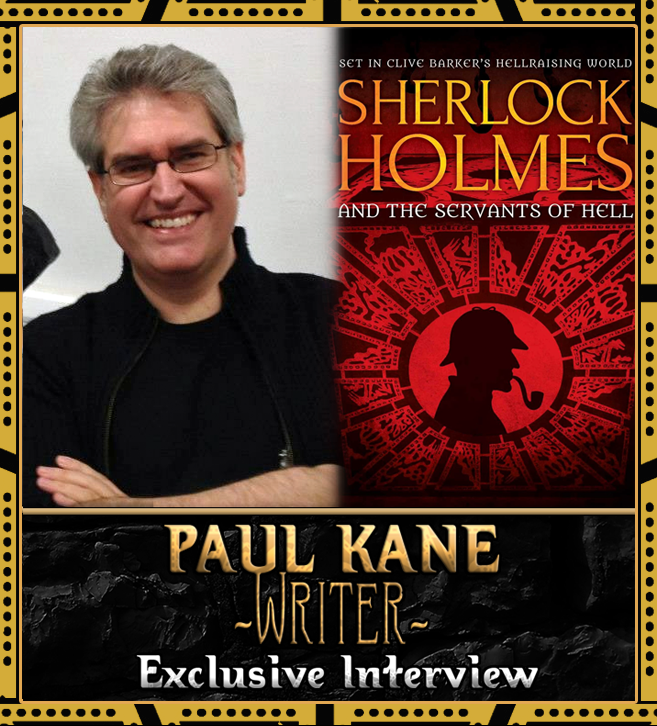
Do you mean in my Hellraiser fiction? I’ve only ever really done one piece of that, Sherlock Holmes and the Servants of Hell, though it is a 90k wd novel. Actually only the third long-form Hellraiser story at the time after The Hellbound Heart and The Scarlet Gospels, so I’m quite proud of that. In it I filtered those themes through the lens of Holmes and his world. There was as much Doyle in the book as Barker, but also a healthy dose of my own voice. It wasn’t easy to juggle the three, or not let those overshadow my own prose style. I think I managed it, though that’s for readers to judge more than me.
In my other genre work, Clive’s influence is always going to be there – but so are many other authors. I adore Frank Herbert’s Dune, for example, and you can see a lot of that story’s influence in novels like Arcana or my Hooded Man fiction, especially in how power corrupts.
What aspects of Clive Barker’s world resonate most deeply with you as a storyteller?
I do love the idea of the outsider, which is easy to relate to as a horror fan in general I reckon. As Anne Bobby put it so eloquently in her introduction to my collection Even More Monsters, ‘Paul shares Clive’s understanding of the plight of the “hidden monsters” that resided in Midian, but moves them into the World Above… At a time where seeing the world in simple terms is impressed upon us, Paul’s stories draw us not only into unfamiliar lives but deeper, more complex and essential questions about our natures – what we fear and why, what we don’t know about others, and about ourselves. What a hidden monster can be.’
I also adore the idea of ordinary people being confronted suddenly with the extraordinary, and how they cope with it. That’s in a lot of my stories, especially Before – which quite a few people called a mix of The Great and Secret Show, American Gods and Cloud Atlas, which I was so delighted about. My character The Infinity definitely had echoes of some of Clive’s villains, and he was such a joy to write. The way he messes with humanity on a global scale was so much fun. There’s a nod to Hellraiser very early on when he pieces himself together that I hope fans of the franchise caught!
Do you revisit Barker’s original texts before writing, or do you prefer to work from memory and intuition?
I re-read Clive’s work a lot in general. For example I recently re-read ‘Rawhead Rex’ – what a wonderful piece of Folk Horror that is! Myself and Marie put together an anthology for Flame Tree of Folk Horror and it wouldn’t have been out of place in there. So things like that are bound to creep into your own work; I recognized bits from Rex in my own ‘Men of the Cloth’ which was filmed as Sacrifice – in particular the American family coming over to rural England, which I know was in the movie adaptation rather than the story.
But when you’re doing something like an adaptation yourself, like the script I wrote for the motion comic of ‘In the Hills, the Cities’ – which sadly didn’t get made in the end – or the audio of The Hellbound Heart, you have to have the source material by your side the whole time. You can’t just work from memory or instinct. That would be fatal.
If you’re talking about before I wrote Servants, such a lot of revisiting the books and films went into that one. Even checking on Harry D’Amour’s appearances, because of course his grandfather Henry is in my novel. I like to give nods to various things, as I think they’re fun for the readers and fans. Easter Eggs, that type of thing.
What does your research process look like when you’re deep in Hellraiser lore?
For projects like Legacy, or Hellraisers – the interview book – or even when Marie and I edited Hellbound Hearts for Simon & Schuster, a lot of research was done into the lore, just to make sure we got things right. For the latter, it was so we could help authors who might not be that familiar with it all, or point out of something had been done before – luckily that rarely happened.
For Servants, I was basically living and breathing Clive’s work, everything Hellraiser-related, but also all the Holmes lore as well – including researching life in the late 1800s. It took a very long time to do all that, and write the book, but it also didn’t feel like work to me because I was thoroughly enjoying myself. I think it was about a year or more before I could sit down and read anything that wasn’t Holmes or Hellraiser-related, even for pleasure, which felt weird at first after spending so long immersed in it.
How do you balance honouring Barker’s tone with expanding the mythology in new directions?
As I say, it’s not easy. For Servants I could have had two sets of fans after my blood if I’d got it wrong! But as a fan of both Clive’s material and the Holmes stories, I managed to find a way to pay homage to it all, whilst not losing myself in it. I think you have to just trust your instincts as a writer, feel your way through it. As for expanding, I like to think I brought both worlds together and added to them equally. There was an idea that Clive came up with for Hellraiser IV which involved Jack the Ripper, so there was a precedent – which I picked up and ran with. I came to both worlds around the same time back in the ’80s, so in my head they’d already been ‘mashed up’, it was just a case of putting that down on paper.
What rules or boundaries do you set for yourself when writing within an established horror universe like Hellraiser?
Many of the rules and boundaries are set for you, really. I’ve worked on various tie-in stuff over the years, some of which never came to fruition beyond a pitch. In all cases, I’ve had to work within the boundaries of what I was allowed to do. When we did Hellbound Hearts and I wrote Servants, we could use anything relating to the original source material – because Clive owns the literary rights – but had to steer clear of material relating to the movies. I believe that’s changed in recent years. When I did my Hooded Man books for Rebellion, I had to set them within the framework of their Afterblight Chronicles. Similarly with anything Warhammer 40k-related, or Marvel and DC.
That said, within reason you’re allowed to put yourself into the work you’re doing too – indeed, it’s encouraged. My version of Robin Hood was influenced not only by the legend, as we lived about 20 minutes away from a certain famous forest, but also other depictions like Robin of Sherwood. One of my proudest moments was when Richard ‘Kip’ Carpenter said that he’d read and enjoyed Arrowhead. For my audio adaptation of The Hellbound Heart, I had to come up with and write new scenes – bridging ones, or just adding character stuff. So, for example, because Kirsty – played brilliantly here by the wonderful Alice Lowe – isn’t Larry/Rory’s daughter, we had to show more of her reaction to what’s going on at the house. We even had bits where she was at work interacting with co-workers. Things like that are necessary for the story to work in a certain format.
With projects like the book accompanying The Scribe Configuration, the puzzle box I co-designed with Mark Buckle, I had a lot more freedom because I was coming up with the material myself. I envisaged a box that would call to creatives over the centuries. I’m fortunate enough to have had two boxes inspired by my work, the second being from the cover of Servants. They’re on the top of my bookcase in the dining room.
The Cenobites often represent and cater for the darkest corners of human desire. Which aspect of that psychology fascinates you most as a writer?
Well, desire’s one of the fundamental things that makes us all human, so there’s that. We all have them, we all chase them, whether they’re good for us or not. The Cenobites themselves did that, which is why they are what they are – and in that form, they also serve a certain function, which is interesting in itself. And of course, what they offer is what some people who seek the box actually want – Angels to some, Demons to others – while some get it so very wrong. Frank thinks he wants what they have to offer, but his idea of pleasure really doesn’t align with theirs. It’s all interesting, meaty stuff, especially in narrative terms.
When editing The Hellbound Hearts, what was your guiding vision for bringing together so many different authors under one mythology?
I think both mine and my co-editor Marie’s vision for that was just to tell as many different stories as we could within the Hellraising universe, like the comics did back in the ’90s. The scope for telling stories in that world is so vast, you could go on forever. Obviously having people like Stephen Jones and Doug on board, for the introduction and afterword especially, was important – but Clive providing not only a foreword but the art for the front was something special indeed. We asked authors who we knew were already fans of the franchise – and, let’s face it, if you’re a horror fan, who isn’t? – but also people who we knew could deliver the goods. We were lucky enough to be able to gather together a stellar lineup, a who’s who of the genre at that time. The result is one of the most popular books we’ve ever done, and it’s not hard to see why.
Which contributions surprised you the most in how they interpreted the Cenobites and the Lament Configuration?
As with any of the anthologies we’ve done together over the years, whether it’s our Dark Academia ones – In These Hallowed Halls & These Dreaming Spires – our Peter Pan one – The Other Side of Never – all from Titan, or our recent Witchcraft one out in January from Flame Tree, when you ask a set of writers to approach a subject you’re going to get lots of different results. So in their own way, they were all surprising, because they were filtered through the authors’ own interests and interpretations of what Hellraiser is.
We were asked about favourite stories in our anthologies on a podcast the other day, and I’ll say the same thing I said then – it’s so hard to pick favourites, because genuinely we love them all. You spend a lot of time with these stories as editors, and it says a lot that no matter how many times you’ve read them for ‘work’, you’d still sit and read them for pleasure. There are so many intriguing and unusual takes on the Hellraiser mythos in there, from Mick Garris’ ‘Hellbound Hollywood’ where he brings his knowledge of filmmaking to bear, to Sarah Pinborough’s fairytale approach in ‘The Confessor’s Tale’ – we enjoyed this so much we reprinted it in our Titan anthology Twice Cursed. From Simon Clark’s historical ‘Our Lord of Quarters’ to Christopher Golden and Mike Mignola’s illustrated steampunk tale ‘Mechanisms’, it all breaks new and exciting ground. There isn’t a single tale in there that we didn’t like – and we can’t have been alone, because the anthology was nominated for a British Fantasy Award!
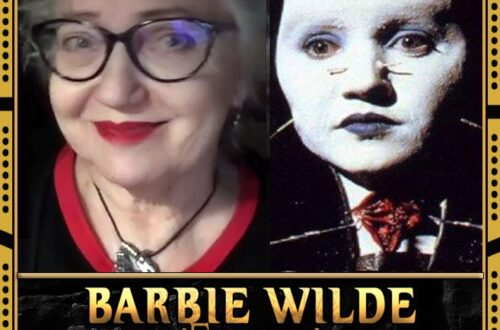
And of course you also have tales by Hellraiser alumni like Pete Atkins, Nick Vince and Barbie Wilde. Indeed, Barbie’s ‘Sister Cilice’ was the starting point for her series of tales about a version of the Female Cenobite, released as The Cilicium Quadra. All in all, a paradise for fans of the Hellraiser universe.
Crossing Sherlock Holmes with Hellraiser was a bold move. What gave you the confidence that these worlds could blend and what was the impetus for your inspiration?
I don’t think I thought about it as bold at the time, if I had I might not have even pitched it! I don’t think I thought of the possible implications, or the weight of those franchises, as I was doing it either, or it would have crippled me. I just figured it would be a cool thing to do, that I as a fan would want to read myself. That’s usually a reason to do anything, if it’s something you’d enjoy yourself that doesn’t exist. I guess I wasn’t so much confident in myself, as I was in the original material and my ability – as someone who knew all of it inside out – to shape it into something unique. To be able to see something that other people hadn’t. As mentioned, I came to both of those at the same time – Hellraiser and Holmes – so in my head there was always a collision of sorts going on. My dad was a big genre fan, and I used to watch a lot of stuff with him, which included the Granada Holmes adaptations featuring Jeremy Brett – possibly my favourite Sherlock. And at the same time, I was watching a lot of horror movies with him, including eventually Hellraiser which I knew he’d love once I’d watched it on my own. I’m always crossing things over in my mind anyway, thinking about new ways of telling old stories, so it was probably just as simple as that – visually anyway. Watching those at the same time, imagining what might happen if the world’s greatest detective ever met up with the Cenobites.
I didn’t think about it all again till the stories started coming in for Hellbound Hearts. As one of the co-editors, I couldn’t write a tale myself for that, so I started to think about ways I could do something Hellraiser-related, and that old idea resurfaced. I’ve always seen Holmes as touching on horror anyway, with stories like The Hound of the Baskervilles and ‘The Adventure of the Sussex Vampire’, not to mention the many films that give him a darker slant. His character and the setting lends itself beautifully to horror, so it wasn’t much of a stretch for me to insert the Cenobites and the puzzle box into that. Throw in an asylum, ala Hellbound, a hedonistic club riffing on Hell on Earth, Watson’s soldiering background – which chimes with Elliot Spencer’s – and you’ve got the recipe for something quite magical.
Were there any elements of the Holmes canon that paired unexpectedly well with the Cenobites in your mind?
Just everything really. But perhaps the most important thing is the mystery of it all, something Holmes would find irresistible. In the first movie, we’re sort of thrown into the deep end; we see Frank bargain for the box, then open it, and – literally – all Hell breaks loose. It’s hard to cast your mind back to the first time you encountered that, but you’re actually just dropped into this ongoing thing, something that’s been happening for centuries, without any kind of knowledge about it. You find yourself asking: what’s happening, where did he go, who are those guys who’ve ripped him to pieces? And during the course of the film we get the backstory, naturally. It’s a powerful narrative device.
Holmes is just trying to work all that out, at least to begin with. If you think about what happened to Frank, it’s the perfect locked room mystery – and Holmes is the perfect detective to solve that, as outlandish as the actual truth turns out to be. Then there’s the literal puzzle of the box itself, which would draw Holmes in and make him want to solve it. I saw an opportunity there to mirror Frank solving the Lament Configuration with an unknown figure at the start of Servants – which is then suddenly revealed to be Holmes at the end of the teaser. You have to wait quite a while before circling back to the rest of that scene, but I think it’s worth it. Holmes finally meeting my Cenobites was a scene that actually gave me goosebumps as I wrote it. Knowing that I was contributing my little bit to this ongoing mythology was something I didn’t take lightly at all. It was both a privilege and so exciting at the same time.
How did you ensure that both universes felt authentic rather than one overshadowing the other?
The authenticity came from my familiarity with them both, I think; and the research again, lots of research. Obviously, there are fans out there who didn’t want to see the two come together at all – Holmes fans who have told me that he doesn’t fit with the Hellraiser world, and vice-versa. But there are enough fans, like myself, who love both and who get what I was trying to do with them. Basically a love letter to those franchises. I tried to give both equal footing, equal space in the novel – to the point where we have half of it in Holmes’ world and half in Hell; it doesn’t get any more equal than that. Hopefully neither overshadows the other, but it was a delicate balancing act. I had to consciously make sure I was never leaning too far one way or the other.
Have you spoken with Clive Barker about your contributions, and if so, what insights has he shared?
Oh, everything was run by Clive! Hellbound Hearts, Servants and the audio of The Hellbound Heart couldn’t have happened without his permission and blessing. I remember pitching Servants and sitting nervously waiting to see what he’d say about the outline. Because I was conscious of not wanting to tread on too many toes, I actually called the family at the start something else – and it was Clive’s idea to just go right ahead and call them the Cottons. It was the right choice and I was glad he made that call. Plus he suggested many other things that helped shape the book and make it what it is. Luckily, he loved the idea and we were off and running with it… That’s the book that keeps on giving, and over the last few years we’ve had Spanish, French and German editions as well. I know I’m very lucky and I’m extremely thankful for Clive’s generosity in this regard. He’s always been very supportive of other creatives, not just myself, and that’s rare in this industry. I like to try and follow his example wherever I can.
Clive’s given me so many words of wisdom over the years, but something that’s stuck with me – and which he’s mentioned in other interviews – is to write what comes from the heart. What he actually said to me was, ‘Write your dreams, Paul.’ It’s fantastic advice, that’s well worth taking if you’re in this game. Pinhead came from a dream of his, after all.
How have long-time Hellraiser fans responded to your expansions of the mythos? Can you recall a particular encounter that touched you?
The fandom is, I have to say, incredible. They’ve been so, so supportive of me over the years and I couldn’t be more grateful. Perhaps they recognize a kindred spirit, because I am just a fan at heart when all’s said and done. And whatever I do, I’m always hoping they’ll enjoy it. I love meeting fans at events and conventions, so it’s always nice to chat with them about either my work or the genre in general.
Not a Hellraiser-specific encounter, but I have had mails about what my work has meant to people and how it’s helped them through some rough times. Sometimes even on a life-threatening scale, so that’s very humbling to me. You don’t set out to do that, but it’s a very nice by-product of what you do and what can be achieved.
If one of your Hellraiser stories were to be adapted for film or TV, which would you choose and why?
I actually pitched for the remake, along with a writer friend of mine, but I can’t really talk about the story here. Maybe someday it’ll end up out there in some form or another… watch this space. I get asked a lot about Servants being adapted, so that’s the one I’d go with. It would be fantastic to see that filmed – but would probably take the budget of an Avengers movie to pull off properly. The battle at the end in particular, because it has so many Cenobites and it’s in Hell. But also the period setting itself; just making a Holmes movie that looks like the Robert Downey Jr ones is very expensive. But who knows, never say never. I’d be lying if I said I wouldn’t like to see it happen someday.
In actual fact, there is a trailer for the Servants puzzle box which imagines a scenario with Holmes and Watson played by Ian Eshelman and Cory W. Ahre – part of the Hellbound Laments, filmed by Joe Manco of Little Spark. It’s how Joe and I met, and from there he made my script of The Torturer, starring another Pinhead, Paul T. Taylor – which is now streaming in over 100 countries. Hellraiser and Clive bringing people together again.
The franchise has gone through many iterations – films, comics, literary works and now an upcoming video game. Where do you see its strongest potential for future storytelling?
I have to say, I really enjoyed the new Hellraiser movie starring Jamie as the Hellpriest, and I keep hearing rumours of a second one – so maybe that’s the way it’s going to go in the future. Cinema is certainly the way to reach a lot of people, as it was when Hellraiser first came out back in 1987. It might be all about streaming and such now, but that still gets the mythology and ideas into a lot of people’s heads.
I wouldn’t say one has the strongest potential over any of the other ways, though. I’d like to see a combination of all the different forms working together, as it has done in the past. Whether it’s via books, comics, games or anything else, there’s room for so many potential stories it’s incredible. I’m still waiting for the long-promised TV show, which would be another way to bring in more fans who might not have seen the films, or read the comics or whatever. If handled right, that has the potential to go on for years and touch so many people; maybe on somewhere like Netflix, Prime or Apple+. It would be a dream come true to be involved in something like that, as someone who’s had other film and TV projects on the go in the past, so I’m just putting that out into the universe!
What has writing in the Hellraiser universe taught you about horror? About yourself?
I think the two are intertwined, honestly. Both writing in the Hellraiser universe and writing horror have taught me so much about life and myself. It’s helped me develop and grow as a writer, fundamentally. And it’s a filter for viewing the world, like any other imaginative endeavour. Horror has always allowed us to comment on things that are happening out there, good or bad, indirectly – and the Hellraiser franchise is no different. The message that War is Hell couldn’t be more relevant today, than it was back when the third film came out – maybe even more so.
Hellraiser, perhaps more than any other franchise, allows you to look into yourself. To ask what you really want from life, to fight for what you feel is right. Whether it’s people searching for something they’ve always wanted without compromise, or protagonists not giving up, Hellraiser has all of that. I love strong women, I always have – I was brought up by them, and am lucky enough to be married to one. Hellraiser has that in abundance, as well. From Kirsty to Julia, from Joey to the Female Cenobites… the list goes on and on. There’s also the notion that even if you feel you’re on the outside, or a stranger or a loner or whatever, there’s always a place for you somewhere.
Why do you think Hellraiser continues to endure and evolve after so many decades?
Simply because of the range, the ways in which people can encounter the box or the Cenobites – sometimes even coming at it from right-angles. Some of the most interesting stories in the comics, and indeed in Hellbound Hearts, are about the human characters and their lives; what brings them to search for the Lament Configuration, or what happens to people in the wake of others being taken. There’s such a vast scope to take it back in time as well, or forward into the future. To fill in the blanks that the movies left behind, or just tell a story about someone who might live down the road from you. It can be epic, or it can be intimate. In the end, it reflects what all good storytelling can do – which ensures that it’s going to go on for a long, long time.
What do you hope readers take away from your contributions to the mythology?
First and foremost, I hope they’ve had a good time reading or listening. That’s the key thing for me, to entertain, to take people’s minds off things that might be happening in the actual world – which is not a very nice place at the moment, I think we can all agree. If readers get anything else out of my writing, I’m delighted – but what I’ve found is that it’s usually quite subjective or personal to them. It might not even be what I intended to get across, as people read things in different ways, which is as it should be. I love that.
Hellraiser has been experiencing a real renaissance, with the 2022 reboot and the upcoming Hellraiser: Revival, introducing the franchise to a whole new generation of fans. Does it bring you joy to now be a part of such an enduring and fascinating legacy?
Absolutely! I still get a kick out of the fact there’s a Hellraiser Wiki page with my name on it. For years, Legacy was the picture they used on the general Wiki page for the franchise and I couldn’t have been more proud of that. No matter what happens in the future, I know that I’ll always be part of a long-running franchise, even after I’ve gone the way of all flesh; I think Clive would probably approve of that statement! I’m delighted about those revivals, as a fan and also someone connected with the mythology in a small way. I’m not into sport, or football, but I imagine it’s kind of like your team making it back into the first division again with an eye on the cup final. I’m not at all surprised, by the way, at how it’s come back because the best ideas always do – and Hellraiser is such an enduring thing. I reckon people will still be finding ways to approach it, many, many years from now… if there’s still a world left, that is.
Are you excited for Hellraiser: Revival? What are your first impressions, and what elements would you like to see the game explore that the films and books possibly haven’t been able to?
I’m very excited about it, just from watching the trailers and seeing all the fan reaction. It looks fantastic! It seems like they’re taking it in new directions as well, which I’m all for. Like I was saying, that’s the way things develop real staying power and go on into the future. I looks like they’re bringing back elements like the original Cenobites anyway, and Doug voicing Pinhead which is pure nostalgia. I’ll just be happy to see what they do with it all, it’s very exciting to see it all unfold.
Are you a gamer yourself? If not, will you experience Hellraiser: Revival hands-on or through watching a playthrough?
I’m not a big gamer myself anymore – I haven’t really played since the ’80s, when you used a joystick. I know, back in prehistoric times! But the boys are, so I’ll be getting reports back about it I daresay. I sometimes wish I had carried that on, but unfortunately I never seemed to have the spare time to do it – I was always writing when I wasn’t at uni, or doing the journalism or the teaching. I’m full-time with the writing and editing now, but there still doesn’t seem to be much in the way of spare hours in the day. In fact the older I get, the less there appear to be. Just keeping up with the latest box-sets of an evening is challenging.
Which platform will you be playing the game on – Playstation, PC or Xbox?
The boys have all of those, so I’d have to ask them when the time comes
What can fans look forward to seeing from you next? Any exciting projects coming up?
I currently have a few things out people can get hold of. Marie and I have two anthologies from Titan, The Secret Romantics Book of Magic:
https://www.amazon.com/Secret-Romantics-Book-Magic-Spellbinding/dp/183541091X
These Dreaming Spires:
https://www.amazon.com/These-Dreaming-Spires-Academia-Anthology/dp/1835410197
The second of our Dark Academia books, plus Beyond & Within Witchcraft is due out from Flame Tree in January:
https://www.amazon.com/Witchcraft-Short-Stories-Horror-Beyond/dp/1835625975
In terms of my own writing, I have a book out from Encyclopocalypse called Short, Sharp, Shocks, which contains the original stories, scripts, behind the scenes photos and anecdotes, posters and extras from all the short movies of mine that have been made. So if you’re into indie filmmaking, or just love horror films in general, this is the one for you. It’s out as a gorgeous hardback edition and also in paperback, both with cover art by Anthony Galatis which comes from The Torturer:
https://www.amazon.com/Short-Sharp-Shocks-Paul-Kane/dp/196603752X
Finally, I have a new novella out as an ebook at the moment, with a paperback to follow. Aura follows a man who sees the world a bit differently from the rest of us, through colours…
https://www.amazon.com/Aura-Paul-Kane-ebook/dp/B0FTMKVPB1
It’s something I’ve been meaning to write for twenty years, and Vervain have thankfully given me the opportunity to explore the idea. I hope people enjoy that one, it’s a wild ride.
Thank you so much for taking the time to share your memories and insights with us, Paul. It means a great deal to the fans and community alike, and we truly appreciate your role in expanding and detailing the Hellraiser mythos. Your work continues to inspire and excite Hellraiser fans around the world and may your legacy be eternal!
My pleasure, thanks for asking me!
Paul Kane is the award-winning (including the British Fantasy Society’s Legends of FantasyCon Award 2022), bestselling author and editor of over a hundred and sixty books – such as the Arrowhead trilogy (gathered together in the sellout Hooded Man omnibus, revolving around a post-apocalyptic version of Robin Hood), The Butterfly Man and Other Stories, Hellbound Hearts, Wonderland (a Shirley Jackson Award finalist) and Pain Cages (an Amazon #1 bestseller).

 His non-fiction books include The Hellraiser Films and Their Legacy and Voices in the Dark, and his genre journalism has appeared in the likes of SFX, Rue Morgue and DeathRay.

 He has been a Guest at Alt.Fiction five times, was a Guest at the first SFX Weekender, at Thought Bubble in 2011, Derbyshire Literary Festival and Off the Shelf in 2012, Monster Mash and Event Horizon in 2013, Edge-Lit in 2014 and 2018, HorrorCon, HorrorFest and Grimm Up North in 2015, The Dublin Ghost Story Festival and Sledge-Lit in 2016, IMATS Olympia and Celluloid Screams in 2017, Black Library Live and the UK Ghost Story Festival in 2019 and 2023, plus the WordCrafter virtual event 2021 – where he delivered the keynote speech – as well as being a panellist at FantasyCon and the World Fantasy Convention, and a fiction judge at the Sci-Fi London festival.

 A former British Fantasy Society Special Publications Editor, he has also served as co-chair for the UK chapter of The Horror Writers Association and co-chaired ChillerCon UK in May 2022.

His work has been optioned and adapted for the big and small screen, including for US network primetime television, and his novelette ‘Men of the Cloth’ was turned into a feature by Loose Canon/Hydra Films, starring Barbara Crampton (Re-Animator, You’re Next): Sacrifice, released by Epic Pictures/101 Films.

Paul was also asked to pitch, along with a co-writer, for the remake of Hellraiser in the 2010s.

In 2023 HorrorCon screened a retrospective of his Film & TV adaptations, and interviewed Paul in front of the live audience.

 His audio work includes the full cast drama adaptation of The Hellbound Heart for Bafflegab, starring Tom Meeten (The Ghoul), Neve McIntosh (Doctor Who) and Alice Lowe (Prevenge), and the Robin of Sherwood adventure The Red Lord for Spiteful Puppet/ITV narrated by Ian Ogilvy (Return of the Saint), plus his plays have been performed at FantasyCon and by Hideout Theatre in London.

 He has also contributed to the Warhammer 40k universe for Games Workshop and has been asked to pitch on projects for both DC/Warner Bros. and Marvel.

 Paul’s latest novels are Lunar (set to be turned into a feature film), the YA story The Rainbow Man (as PB Kane), the sequels to RED – Blood RED & Deep RED, all collected in an omnibus edition – the award-winning hit Sherlock Holmes & the Servants of Hell, Before (an Amazon Top 5 dark fantasy bestseller), Arcana and The Storm.

 In addition he writes thrillers for HQ/HarperCollins as PL Kane, the first of which, Her Last Secret and Her Husband’s Grave (a sellout on Waterstones.com and at The Works) came out in 2020, with The Family Lie released the following year (all three novels were Amazon sellouts).

 His books have been translated into many languages, including French, German, Spanish, Ukrainian, Turkish, Czech, Bulgarian and Polish.

 Paul lives in Derbyshire, UK, with his wife Marie O’Regan.

 Find out more at his site www.shadow-writer.co.uk which has featured Guest Writers such as Stephen King, Charlaine Harris, Robert Kirkman, Catriona Ward, Dean Koontz, Olivie Blake, Guillermo del Toro and Clive Barker.